






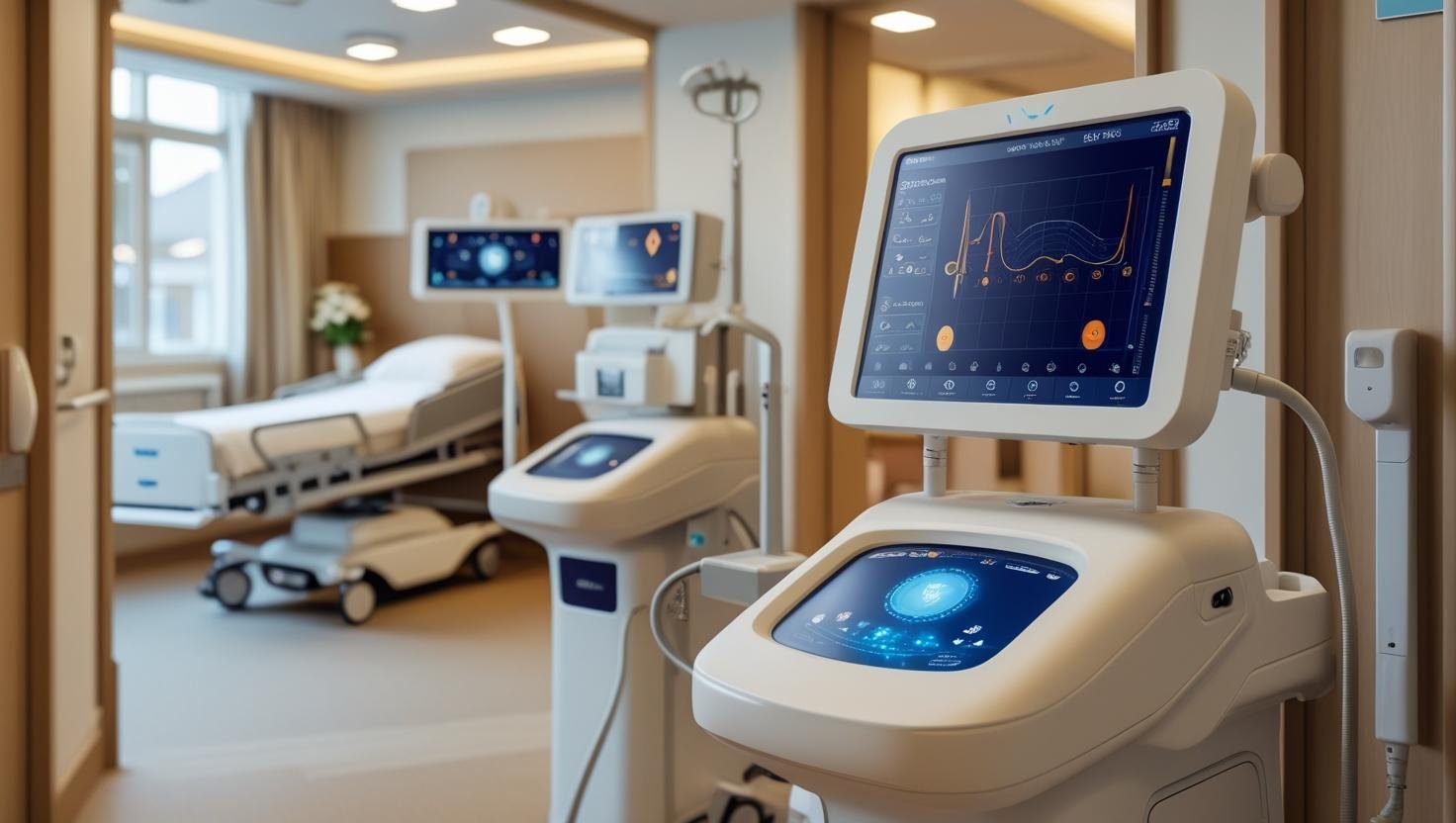
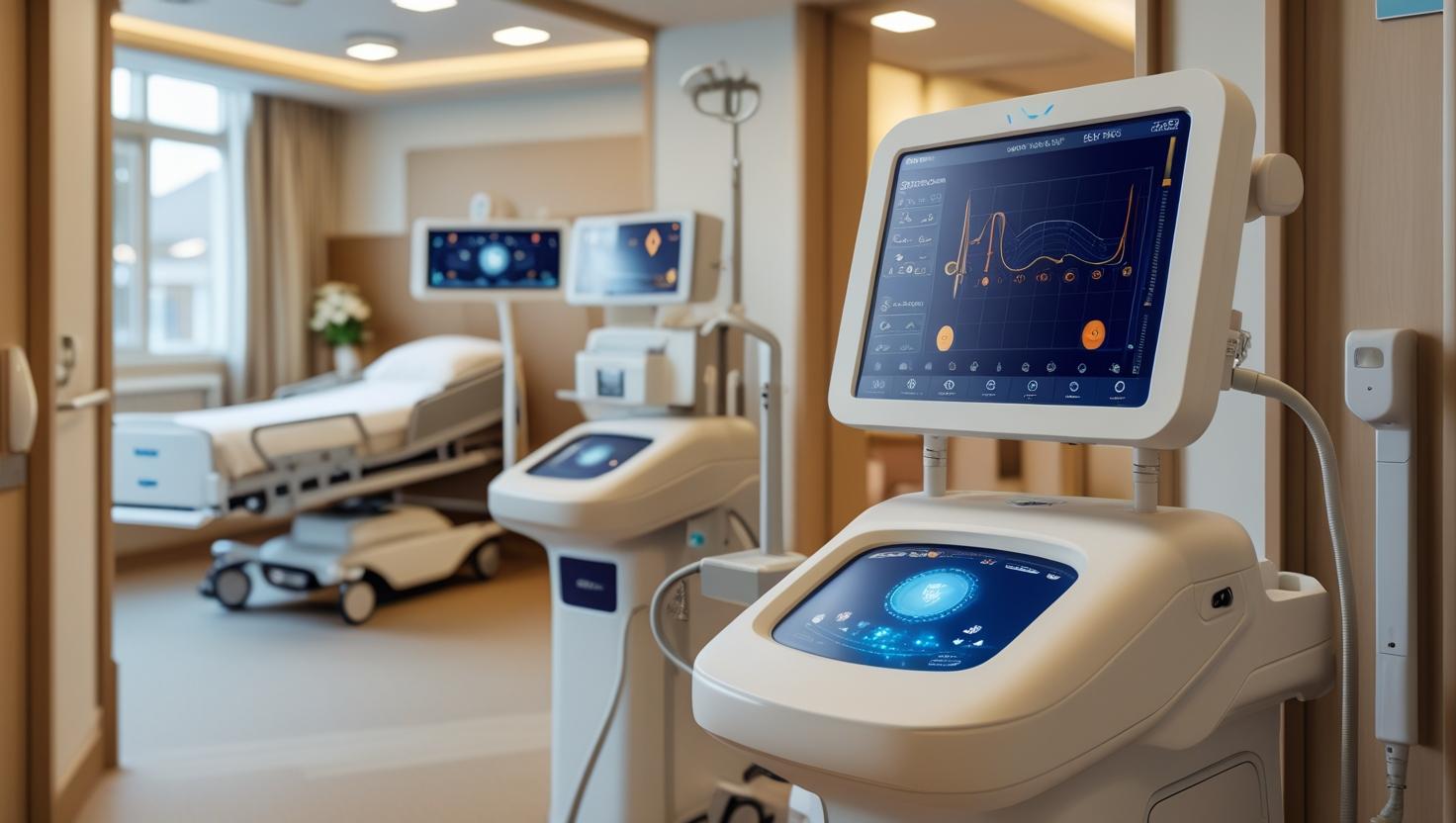
Building trust in smart healthcare by leveraging privacy-preserving health sensors.
Smart healthcare is transforming patient care through automation, data-driven insights, and continuous monitoring. However, with technological advancements, concerns about personal privacy and data protection are also growing. Therefore, modern health sensors must not only provide accurate readings but also ensure patient dignity and safety. Linpowave 's radar-based healthcare solutions are designed to meet both of these needs.
Why privacy is so important in modern healthcare
In hospitals, nursing homes, and home health settings, privacy is not just a matter of comfort, but also a legal and ethical requirement. Traditional monitoring tools, such as cameras or wearable devices, can be disruptive and require continuous adherence to regulations or recording of identifiable information.
Radar-based health sensors offer an alternative: they can detect patient presence, posture, respiration, and heart rate without capturing images or personally identifiable information . This ensures respectful, safe patient monitoring, free from the risks associated with visual surveillance.
The role of health sensors in intelligent medical systems
The smart healthcare ecosystem integrates multiple technologies to improve patient outcomes. Health sensors are at the heart of these systems, enabling continuous, non-invasive monitoring for early intervention.
Linpowave's millimeter-wave health sensor brings a unique advantage to this setup:
Non-contact sensing through bedding, clothing, or obstacles
Vital signs monitoring, including breathing and micro-movements.
Real-time alerts for falls or abnormal patterns
It can be integrated with hospital systems, cloud platforms and IoT devices.
By embedding these sensors into smart beds, ceilings, or wall-mounted devices, healthcare providers can achieve reliable data collection without disrupting patients' daily lives.
Balancing the accuracy and privacy of health monitoring
Accuracy is crucial in healthcare, but privacy must be protected. Radar-based systems process data as motion patterns and vital signs, rather than as image or audio recordings, thus inherently possessing privacy and security.
Compared to optical or camera-based solutions, radar health sensors:
| feature | Radar health sensor | Camera-based systems |
|---|---|---|
| Image capture | ❌ None | ✅ Yes |
| Working in the dark | ✅ Yes | ⚠️ Limited |
| Privacy invasion risk | ❌ Low | ⚠️ High |
| Patient comfort | ✅ High (non-contact) | ⚠️ Variables |
| maintain | ✅ Low | ⚠️ Medium |
Applications of privacy-preserving smart healthcare
Nursing home has no cameras in its private spaces for fall detection.
ICU patient monitoring without physical device connection
Postoperative recovery and monitoring of vital signs without affecting rest
Family healthcare systems provide careful and continuous monitoring for chronic diseases.
In all these cases, the technology provides actionable data to caregivers while also upholding the dignity of patients.
Popular privacy issues related to health sensor technology
Is it safe to use radar continuously near a patient?
Yes, millimeter-wave radar uses low-power, non-ionizing waves, so it can operate safely around the clock.Can the data from radar health sensors be encrypted?
Of course. The Linpowave system supports secure transmission protocols for hospitals and cloud systems.Do radar sensors store personal data?
No. They process physical motion data, not images or audio, thus avoiding direct recognition.Can these sensors completely replace wearable devices?
In many cases, the answer is yes, especially in long-term vital sign tracking.How can they be integrated into existing smart healthcare infrastructure?
Linpowave provides an SDK and standard communication interfaces for easy system integration.
A smarter, safer future of healthcare
Smart healthcare is not just about more advanced technology, but also about technology that patients can trust. Linpowave helps healthcare providers deliver precise, respectful, and future-proof healthcare by combining advanced health sensors with carefully designed privacy protections .
To learn more about integrating privacy-preserving radar sensors into your healthcare system, please visit our homepage or contact us .