






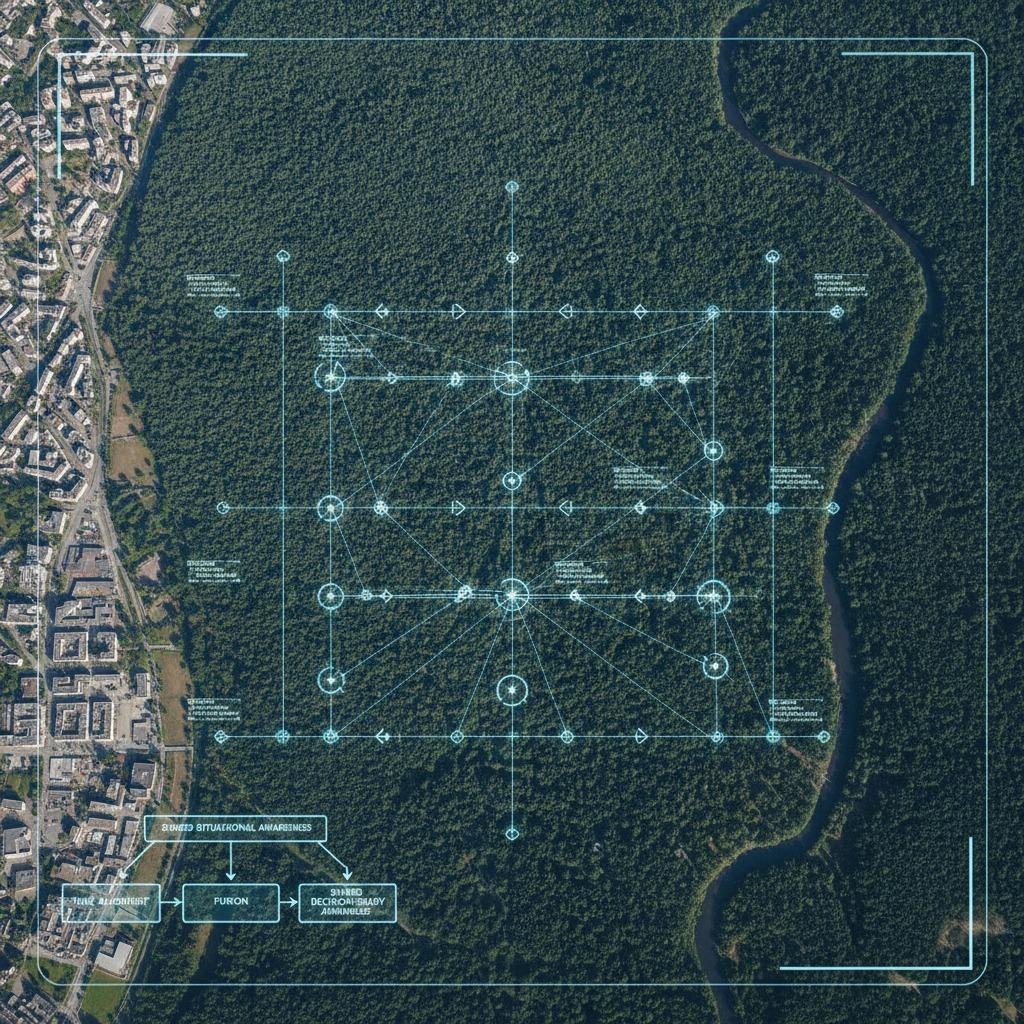
Why a swarm sensing protocol matters when multiple vehicles must act as one
A Swarm sensing protocol is the quiet layer of logic that keeps a group of drones, robots, or autonomous vehicles from behaving like a crowd. When the sensing stack is weak, the system may still collect data, but the data arrives too late, in the wrong frame, or without enough context to support a group decision. That is where real trouble starts: vehicles drift, spacing collapses, operators lose confidence, and a mission that looked straightforward on paper becomes a cleanup exercise in the field.
For engineers and sourcing teams, the practical question is not whether a swarm can sense. It is whether the sensing architecture can support coordination, collision avoidance, and mission continuity under noise, motion, and partial failure. That is a different standard. It asks the buyer to think beyond a single sensor and look at timing, communication, relative positioning, and what happens when one node sees more than the others.
What the protocol is really trying to solve
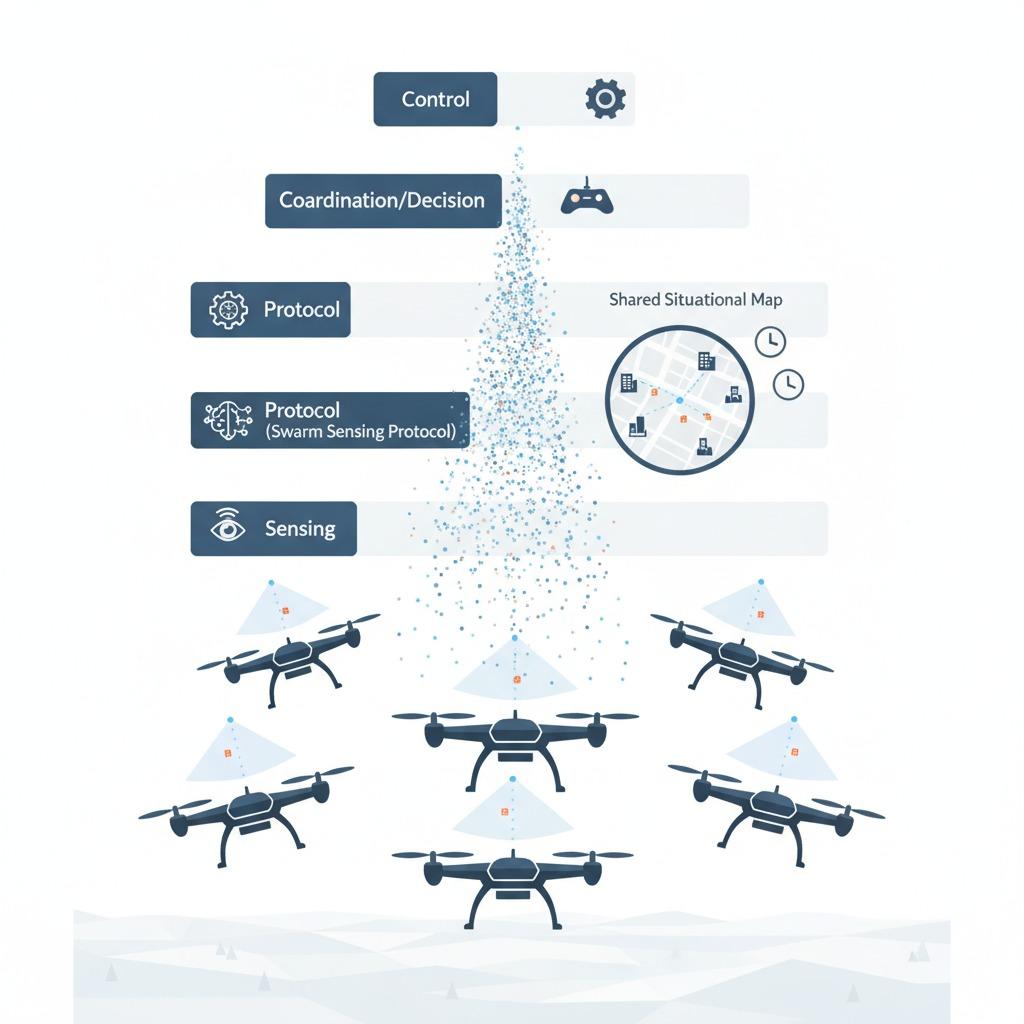
In a multi-agent system, every unit needs a usable picture of nearby units, nearby obstacles, and sometimes the broader operating environment. The challenge is that each node sees only a slice of reality. A good Swarm sensing protocol stitches those slices together quickly enough for action. The goal is not perfect knowledge. The goal is shared, timely, decision-ready awareness.
This matters in applications where spacing and motion are tightly coupled. If one drone slows unexpectedly, the others may need to adjust in seconds. If one ground robot detects a hazard, the rest may need to reroute without stopping the whole group. That is why terms such as Leader-follower ranging, Collaborative trajectory deconfliction, Group threat assessment, and Flocking behavior monitoring are more than research jargon. They describe the actual functions buyers are trying to buy into.
Key capabilities buyers should compare
Not every platform handles swarm sensing the same way. Some systems are optimized for relative distance measurement. Others focus on shared obstacle detection or mission-level coordination. In practice, most buyers should look for a mix of these capabilities rather than one headline feature.
Leader-follower ranging
This is often the simplest coordination model, but it can be deceptively hard to execute well outdoors or in cluttered spaces. The ranging method must stay stable as units accelerate, turn, and lose line of sight. If the system drifts too much, the formation becomes sloppy and the control loop starts chasing its own errors.
Collaborative trajectory deconfliction
Here, the sensing stack is not just reporting positions. It is helping units avoid path conflicts before they become near misses. This usually requires fast data exchange, reliable timestamps, and a control layer that can translate raw measurements into actual movement constraints. A buyer should ask whether the protocol supports distributed decisions or depends on a central brain that becomes a bottleneck.
Group threat assessment
For security, inspection, or defense-adjacent use cases, the swarm may need to classify a hazard and decide whether the threat is local or systemic. That can mean combining visual, range, acoustic, or other signals across the group. The important detail is not the sensor type alone, but how the protocol merges those readings without overwhelming bandwidth.
Flocking behavior monitoring
Sometimes the system must preserve a natural, fluid formation rather than a rigid route. Flocking behavior monitoring helps detect whether the group is maintaining cohesion, spacing, and directional consistency. This is useful when the mission values coverage and adaptability, but it does depend on clean coordination data. A noisy protocol can make a controlled flock look erratic.
Selection criteria that tend to separate workable systems from impressive demos
Buyers often get distracted by range claims or the number of nodes in a lab test. Those figures matter, but they are not the whole story. A useful comparison starts with operating conditions: indoor or outdoor, line of sight or obstructed, high speed or low speed, fixed geometry or changing formation. The sensing protocol should match the real mission profile, not the marketing slide.
Latency is another practical filter. A swarm can tolerate some error; it cannot tolerate stale information. Also worth checking is resilience to node dropout. In the field, units fail, batteries sag, radio links fade, and dust or weather complicates the picture. The protocol should degrade gracefully rather than collapsing when one participant disappears.
Integration effort deserves more attention than it usually gets. Engineers need to know how the protocol interfaces with onboard controllers, navigation software, and operator dashboards. If data formats are awkward or synchronization is weak, the deployment will consume time that never showed up in the initial budget.
Common mistakes in swarm sensing projects
One common mistake is treating swarm sensing as a pure communications problem. It is not. Communication is only part of the stack; sensing geometry, control timing, and failure handling are just as important. Another frequent error is over-specifying the lab scenario. A system that works beautifully in a clean test area may struggle the moment multipath, occlusion, or mixed terrain appears.
There is also a tendency to assume that more data automatically means better coordination. In practice, excessive data can slow the system and make deconfliction harder. A lean protocol that shares the right state at the right time is usually more valuable than a noisy one that floods the network.
Practical buyer advice for engineering and sourcing teams
If you are comparing suppliers or internal architectures, ask for a demonstration that reflects your actual motion profile and spacing requirements. Ask how the protocol handles time alignment, how it behaves when one node drops out, and whether it supports both local sensing and group-level decisions. If the answer stays vague, that is a warning sign.
It is also sensible to request evidence of how the system supports the specific coordination mode you care about. A platform built for leader-follower ranging may not be the best fit for collaborative trajectory deconfliction. Similarly, a setup tuned for flocking behavior monitoring may not be ideal if your mission depends on threat detection and rapid rerouting.
For product teams, the best next step is usually a short technical review: map the mission, define the failure modes, and test the protocol against those scenarios before committing to scale. That keeps the discussion grounded in operations instead of assumptions.
FAQ
Is a swarm sensing protocol the same as swarm control?
Not quite. Sensing provides the shared picture; control turns that picture into coordinated motion. The two are tightly linked, but they are not the same layer.
Can one protocol work for every swarm application?
Rarely. The right approach depends on node count, environment, speed, and whether the mission is focused on formation, inspection, security, or exploration.
What should I ask before selecting a platform?
Start with latency, resilience, synchronization, and how the system handles partial failure. Then check whether the protocol supports the coordination model you actually need, not just the one that sounds most advanced.
A sensible next step
If you are evaluating a Swarm sensing protocol for a new platform or upgrade, begin with your mission constraints rather than feature lists. Build a short comparison around ranging, deconfliction, threat assessment, and formation monitoring, then test the protocol under real motion and real network conditions. That is usually where the answer becomes obvious.