







Why tactical decision support matters when seconds are limited
Tactical decision support is not just a software feature; it is the difference between an operator seeing a fragment of the situation and a team making a workable choice under pressure. In fast-moving environments, people are rarely short on data. They are short on time, attention, and a clean way to turn scattered inputs into action. That is where the value sits: reducing hesitation, avoiding duplicated effort, and helping the right person act on the right information at the right moment.
For engineers, sourcing managers, and product teams evaluating these systems, the real question is less about whether the platform can collect information and more about whether it can help users decide. Can it surface the most relevant signal, suppress noise, and support a shift in priorities without forcing the operator to rebuild the picture from scratch? Those are the practical questions that tend to matter in the field.
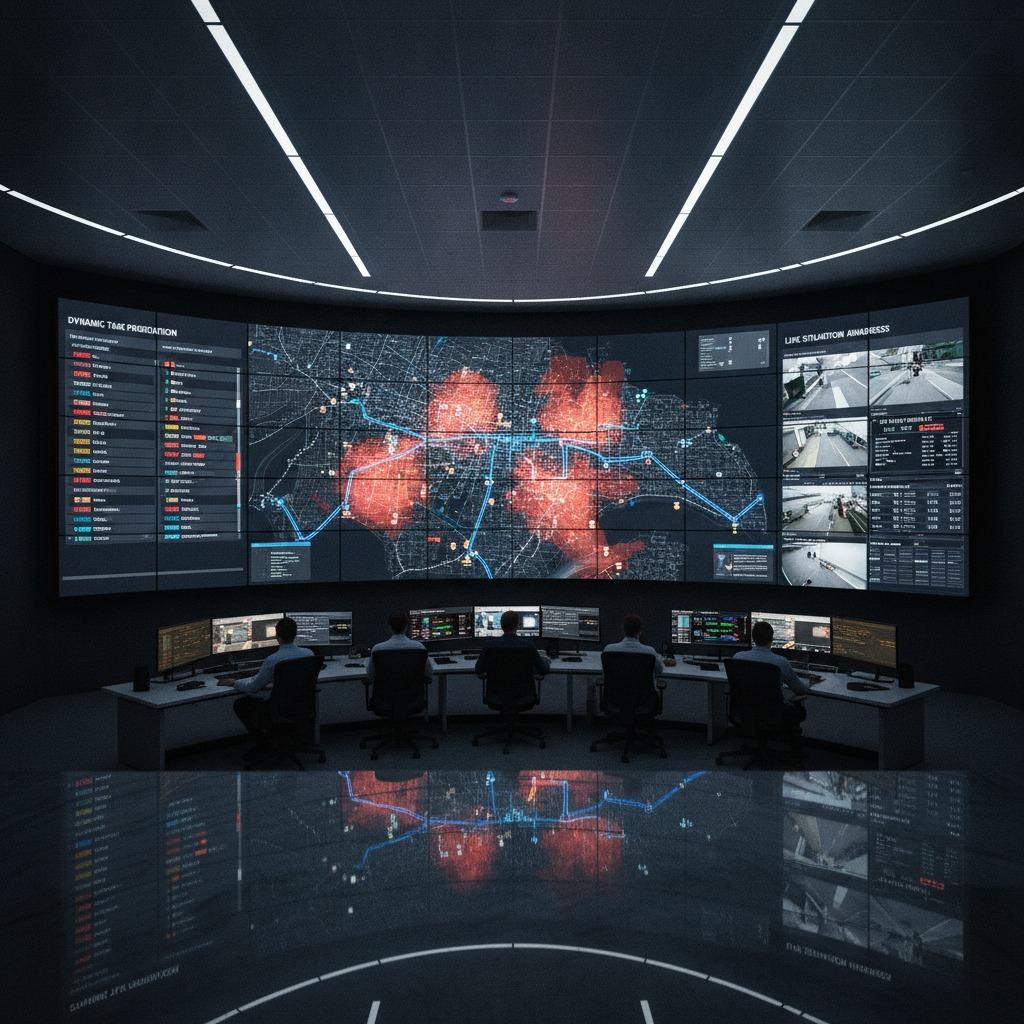
The operational problem: too much information, not enough clarity
Modern command, security, and response workflows are crowded with overlapping feeds: maps, alerts, telemetry, operator notes, camera views, and status updates from different teams. In a calm office that looks manageable. Under pressure, it becomes a bottleneck. The delay is not always dramatic; sometimes it is a series of small pauses while people confirm what they already suspect.
That is why situational awareness enhancement has become a central requirement rather than a nice-to-have. Good systems do not simply display more data. They organize it so a user can recognize what changed, where the risk is building, and what must be handled first. If the interface takes too much interpretation, the operator ends up doing the system’s job as well as their own.
What effective tactical decision support usually includes
A useful platform often combines mapping, event filtering, prioritization logic, and clear presentation layers. The details vary by application, but the structure is familiar. First, identify the relevant area. Then interpret activity inside that area. Finally, rank the next actions in a way that reflects mission goals rather than raw data volume.
Threat zone mapping
Threat zone mapping helps teams visualize where attention is needed. In practice, that can mean marking hazard boundaries, highlighting likely escalation areas, or showing route constraints in a way that is immediately readable. The caution here is simple: maps can look authoritative even when the underlying inputs are weak. Buyers should ask how the system updates zones, how it handles stale data, and whether the model makes uncertainty visible.
Dynamic task prioritization
Dynamic task prioritization is what keeps a team from treating every alert as equal. If a platform cannot revise task order as conditions change, it becomes a dashboard rather than a decision aid. Good prioritization logic should be understandable to operators, not hidden behind a black box. In many deployments, a transparent rule set is more useful than a mysterious score that nobody can explain after the event.
Mission-oriented sensing mode
Mission-oriented sensing mode is the practical bridge between data collection and useful output. Instead of gathering everything all the time, the system emphasizes the sensors, feeds, or views that matter for the current objective. That can improve speed and reduce clutter, especially when bandwidth, screen space, or human attention are limited. The tradeoff is obvious: if the mission changes and the sensing mode lags behind, the system can miss emerging needs. That is why reconfiguration speed matters.
How to evaluate a system before you buy
Selection is rarely about one standout feature. It is about whether the platform behaves well across changing conditions, mixed user roles, and imperfect inputs. A buyer-facing evaluation should include the following questions:
Does the interface remain readable under pressure, or does it become dense with alerts and overlays? Can operators adjust priorities without support from an administrator? Are the outputs easy to explain during review or debrief? Does the system integrate with the tools already in use, or does it create a parallel workflow that people will quietly avoid?
One practical warning: vendors sometimes demonstrate an idealized environment. Real sites have inconsistent data, legacy devices, and people who use shortcuts. A platform that works only when everything is clean is not much help in the field.
Common mistakes teams make
The most common mistake is buying for display rather than decision-making. A polished screen can be impressive and still leave operators unsure what to do next. Another mistake is over-automating triage. If every important judgment is buried inside logic that users cannot review, trust erodes quickly.
Teams also underestimate training time. Even good tactical decision support tools need a short period of adoption before they feel natural. That is not a flaw; it is normal. But if the workflow requires constant explanation, the product may be asking too much of the user.
Practical buyer advice for sourcing and engineering teams
When comparing options, start with the end use case. A security response team, a field operations group, and a product team building a broader command platform will not need the same interface or the same alert logic. Ask vendors to show how the system behaves when conditions change, not just when the data is tidy.
It also helps to think in terms of handoffs. Who sees the alert first? Who confirms it? Who acts? A strong solution supports that chain without creating extra steps. If a platform improves visibility but slows coordination, the net result may be worse than the problem it was meant to solve.
FAQ
Is tactical decision support only for defense applications?
No. The same general approach can be useful in security operations, emergency response, industrial safety, and any environment where teams must interpret changing conditions quickly.
What matters more: analytics or usability?
Both matter, but usability usually decides whether analytics are actually used. If operators do not trust or understand the output, the smartest model will not help much.
Should buyers prefer full automation?
Not by default. In many real-world settings, assisted decision-making is safer and easier to adopt than full automation. Human review still matters when the cost of a wrong call is high.
Next step
If you are evaluating tactical decision support platforms, compare them against the real workflow first, not the demo sequence. Look for clear prioritization, usable mapping, and a sensing approach that matches the mission rather than overwhelming it. The best systems do not try to replace judgment; they make judgment faster, cleaner, and more defensible when the pressure is on.