






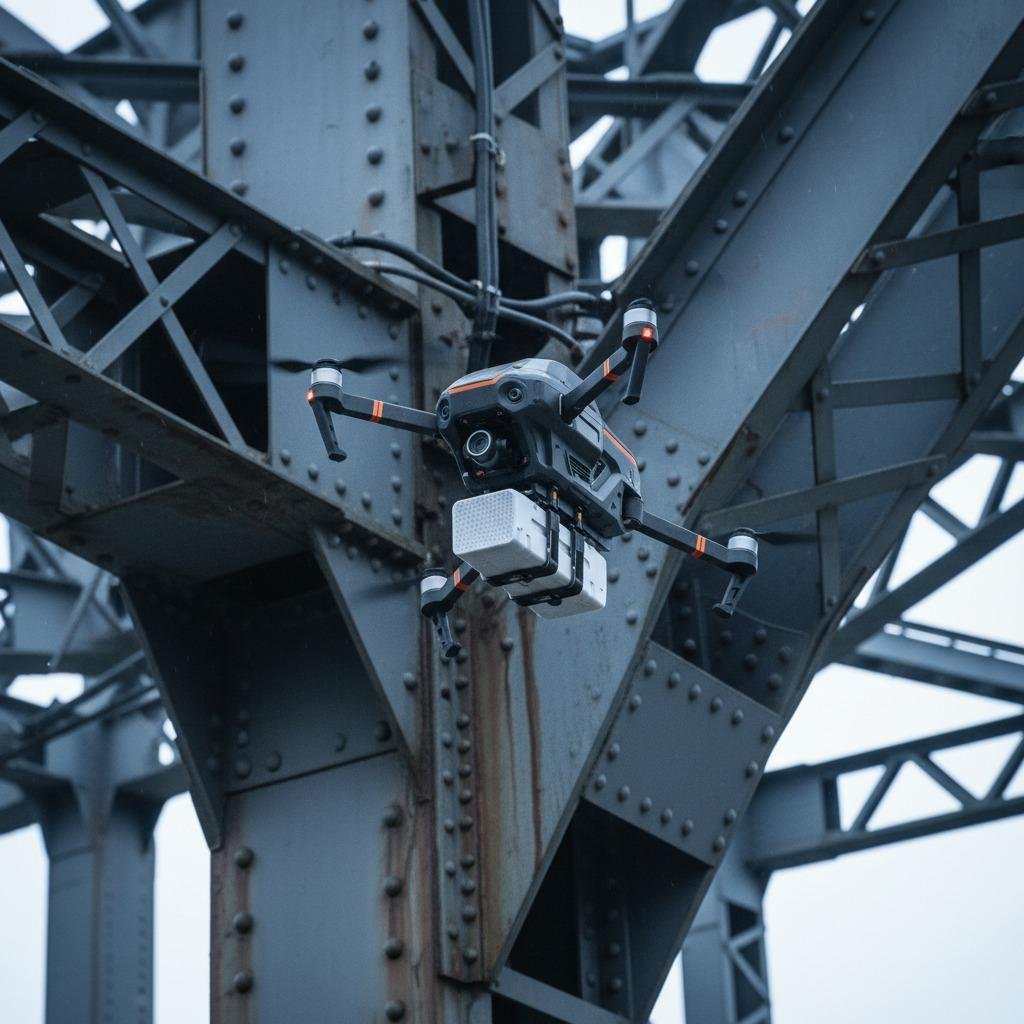
Why terahertz radar for drone work is getting attention
Terahertz radar for drone applications is drawing interest because small aerial systems are being asked to do more in tighter spaces. Inspecting infrastructure, mapping interiors, monitoring industrial sites, and supporting search tasks all demand better detection at short range, better discrimination of small targets, and more reliable sensing when cameras struggle. The appeal is not that terahertz solves every drone problem; it does not. The appeal is that it offers a different sensing window that may help where traditional radio bands, optical systems, or basic obstacle sensors start to feel limited.
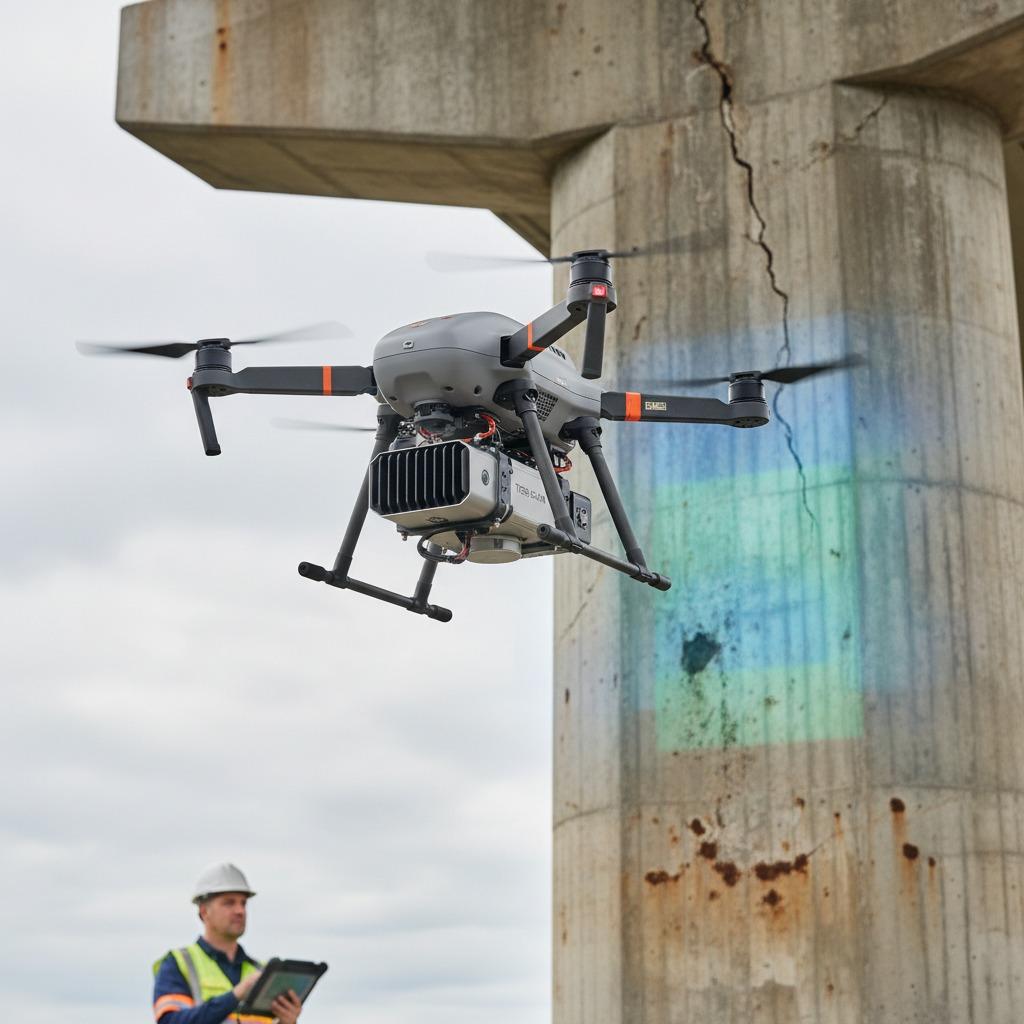
For engineers and sourcing teams, the real question is not whether terahertz sounds advanced. It is whether the technology can fit a flight platform, survive field use, and deliver information that changes a decision. That means looking beyond headline frequencies and asking about payload weight, power draw, environmental sensitivity, integration complexity, and what kind of detection range is realistic for the mission.
What problem it is trying to solve
Drones often operate in conditions that are hard on ordinary sensing methods. Dust, smoke, glare, partial occlusion, thin structures, and cluttered backgrounds can all reduce confidence. A drone may need to identify small defects, avoid wires, or distinguish surface changes that are too subtle for lower-resolution sensing. Terahertz systems are interesting because they can support high-resolution sensing at short distances and may reveal features that are not obvious in visible-light imagery.
That said, there is no free lunch. Terahertz waves can be affected by atmospheric absorption and practical range limits, and performance depends heavily on the specific system design. In other words, buyers should treat the technology as a targeted tool, not a universal replacement for standard radar or imaging sensors.
Quick reference: where terahertz radar fits and where it does not
Good fit
Short-range inspection, small-object detection, surface characterization, and missions where fine spatial detail matters more than long standoff distance.
Less suitable
Long-range surveillance, broad-area airborne search, and harsh weather missions where propagation losses or platform motion may dominate the design.
Key design and integration issues buyers should watch
Drone integration is usually where promising sensing concepts get grounded. The sensor has to live inside a weight budget, and it has to work with the drone’s power system, flight time, vibration profile, and data link. Even if the sensing head is compact, the supporting electronics may not be. Thermal management matters too; high-frequency systems can be more demanding than teams expect.
Another practical point: data handling. High-resolution sensing can produce data streams that are difficult to process onboard in real time. If the workflow depends on cloud processing or ground-station analysis, connectivity becomes part of the system risk. For industrial buyers, that affects deployment more than the spec sheet does.
Emerging ideas shaping the field
Some of the more forward-looking concepts around drone sensing include Quantum radar integration concepts, Reconfigurable intelligent surface (RIS) aided sensing, Cognitive radar adaptivity, and Bio-inspired sensing algorithms. These are not all equally mature, and some remain research-heavy rather than field-ready. Still, they point toward a broader trend: sensors that adapt to the scene instead of behaving like fixed instruments.
Cognitive radar adaptivity, for example, suggests a system that changes its sensing behavior based on what it detects. That could improve efficiency and reduce wasted power. RIS aided sensing is more experimental in many settings, but it reflects the industry’s interest in shaping propagation rather than merely measuring it. Bio-inspired sensing algorithms may help drones interpret noisy data more gracefully, especially in cluttered environments. Buyers should be cautious here; the algorithm can look impressive in a demo and still be fragile in an industrial yard.
How to evaluate a terahertz radar for drone project
Start with the mission, not the technology. Define the object size, working distance, flight duration, environmental conditions, and whether the drone needs real-time alerts or post-flight analysis. Then ask vendors or engineering partners for system-level answers, not isolated component claims.
Useful questions include: What is the practical detection range on a moving drone? How sensitive is performance to humidity, dust, or angle of view? What processing happens onboard versus offboard? Can the sensor be mounted without hurting flight stability? And if the platform is upgraded later, does the sensing stack scale with it?
It is also worth asking for integration experience. A strong sensing concept can fail simply because mounting, EMI, or software interfaces were treated as afterthoughts. In procurement terms, that often means the lowest upfront quote is not the lowest project cost.
Common mistakes in buyer evaluations
One common mistake is comparing terahertz systems as if they were interchangeable with conventional radar. They are not. Another is assuming that high resolution automatically means better decisions. If the algorithm cannot separate useful detail from noise, the extra resolution may just create more data.
A third mistake is ignoring the platform. A drone with short endurance may not be able to support the added payload and compute load. That is especially important in inspection work, where the flight path may already be constrained by safety rules or access limitations.
Practical takeaway for sourcing and engineering teams
Terahertz radar for drone applications makes the most sense when the mission depends on short-range precision and the team is willing to design around the technology’s constraints. It is promising for specialized inspection and sensing tasks, but it should be evaluated as a system, not as a buzzword.
If you are comparing options, focus on integration cost, environmental robustness, and the quality of the output data in your actual use case. That is usually where the real decision gets made.
What to do next
For any serious drone sensing project, build a test plan around real targets, real flight profiles, and real environmental conditions. Ask for sample data, integration documentation, and a clear explanation of what the system can and cannot do. The best terahertz solution is the one that supports the mission without turning the drone into a laboratory experiment.