






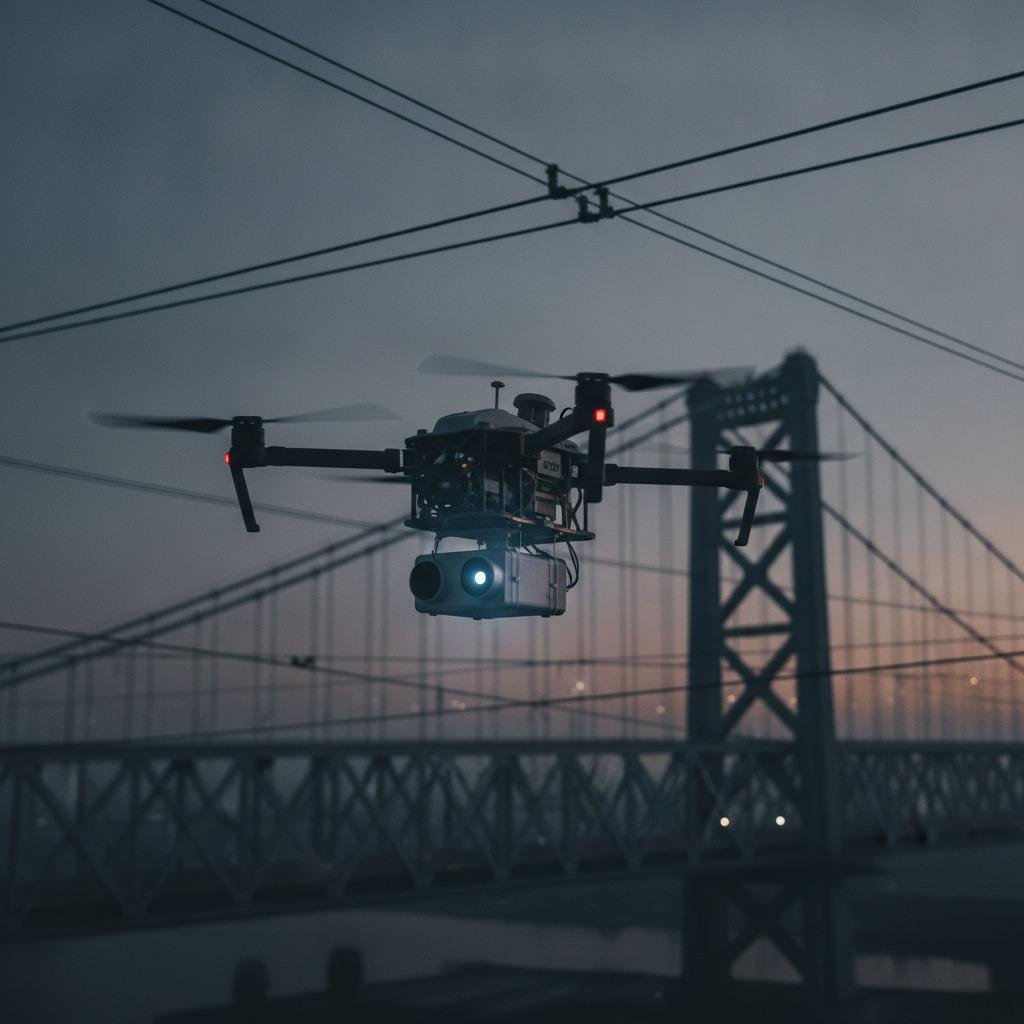
Why terahertz radar for drone applications is getting attention
Terahertz radar for drone platforms is starting to matter because many of the oldest sensing assumptions in unmanned flight are breaking down. A camera can be blinded by glare, fog, dust, or poor contrast. A conventional radar can be robust, but it may not provide the fine spatial resolution needed to see small obstacles, wires, surface defects, or weakly reflecting targets at close range. For teams building inspection drones, autonomous navigation systems, or specialized defense and research platforms, that gap is exactly where terahertz sensing has started to look interesting.
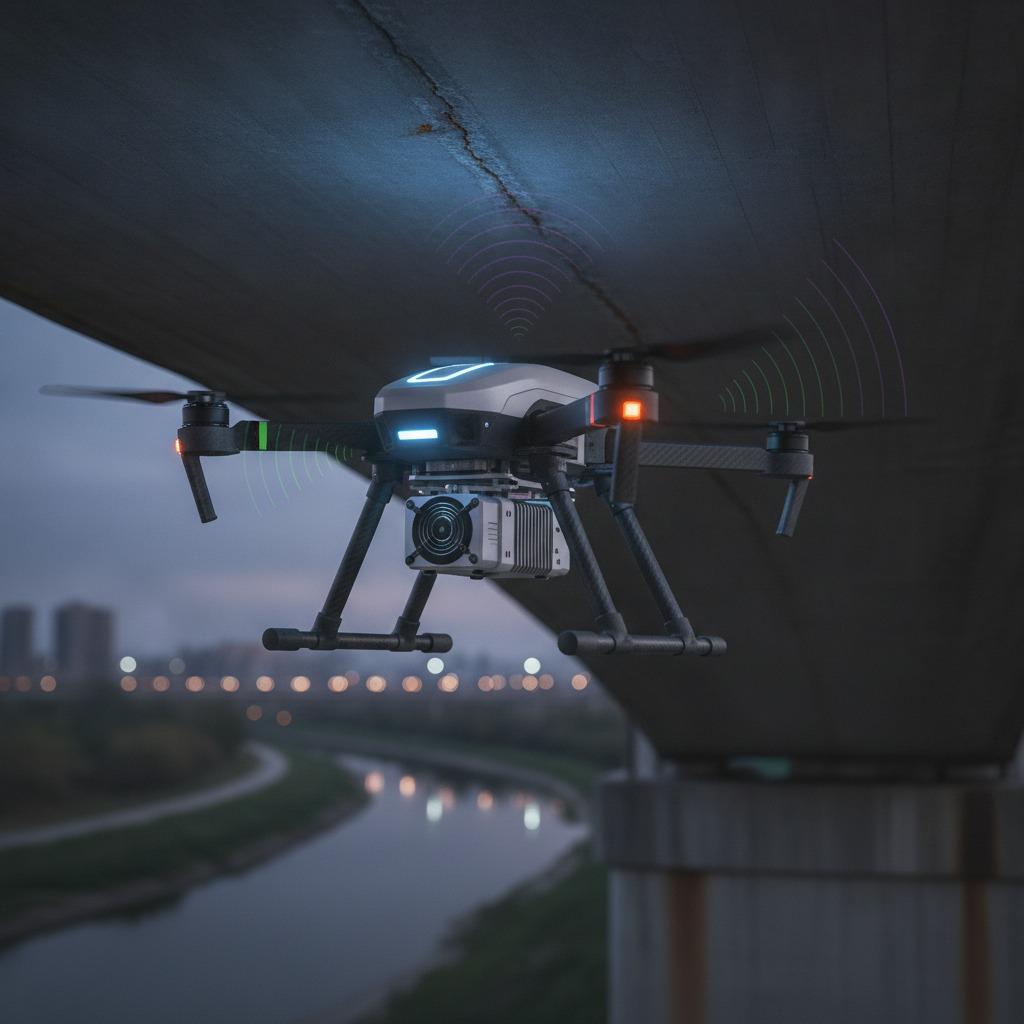
The attraction is not mystery. It is the combination of shorter wavelength, compact antenna possibilities, and the promise of detailed imaging in a small form factor. That said, buyers should not confuse promise with readiness. Terahertz systems bring their own engineering constraints: atmospheric attenuation, component complexity, power management, heat, and data handling all become more serious when the payload is airborne. So the real question is not whether the technology is impressive. It is whether the use case justifies the payload, the integration effort, and the operating limits.
What problem this sensing approach is trying to solve
Drone operators often need better perception at short and medium range than standard electro-optical tools can reliably provide. The hardest jobs are usually the ones where visual data becomes unreliable: flying in haze, inspecting textured surfaces, detecting small protrusions, or maneuvering near complex infrastructure. Terahertz radar can help by adding a different sensing modality that is less dependent on ambient light and, in some scenarios, can support fine-grained detection.
For engineering teams, the decision often comes down to this: do you need a sensor that sees a scene differently, or do you simply need a better camera? If the answer involves obscurants, low contrast, or millimeter-scale features, terahertz radar for drone systems may deserve a serious look. If not, the added complexity may be hard to defend in a commercial program.
Key takeaways before comparing options
There are a few practical points sourcing managers and product teams usually want upfront.
First, terahertz radar is not a universal replacement for optical sensing or conventional RF radar. It is a complementary tool. Second, airborne integration is as much a systems question as a sensor question: weight, antenna placement, vibration, shielding, and thermal design can decide whether a concept survives flight testing. Third, the software stack matters nearly as much as the front end. Without strong signal processing, the hardware gains may be difficult to translate into useful detections.
That is where newer ideas such as cognitive radar adaptivity and bio-inspired sensing algorithms are becoming relevant. They can help the system adjust to changing conditions, clutter, or target behavior instead of running a fixed scan pattern. In practice, that can improve efficiency and reduce false alarms, though implementation quality varies widely.
How terahertz sensing compares with other drone sensing paths
Camera-based perception
Optical systems remain the simplest and cheapest for many drones. They are lightweight, widely understood, and easy to integrate. Their weakness is obvious: they rely heavily on visibility and lighting. If your application includes smoke, fog, dust, or night operations, a camera-only approach can become fragile.
Conventional radar
Standard radar usually offers better environmental robustness and longer practical range, but its resolution can be limiting for small-object detection on compact platforms. Terahertz radar narrows that gap by pushing toward finer spatial detail, although at the cost of more challenging propagation and hardware design.
Hybrid sensing stacks
For many drone programs, the most realistic path is hybrid. A camera or lidar may handle general navigation while terahertz radar covers the hard cases. This kind of stack is also where Quantum radar integration concepts sometimes appear in research discussions, although buyers should separate lab concepts from deployable systems. Interesting as those concepts are, they are not the same as a production-ready airborne platform.
Design and integration issues that matter most
Payload mass is the first gate, but not the only one. Terahertz hardware can demand careful thermal control, stable mounting, and clean electrical integration. Even small vibration effects can complicate measurement quality, especially if the sensing chain is trying to resolve fine detail. Antenna alignment and packaging also deserve attention earlier than many teams expect; a sensor that looks compact on paper may be awkward once power, shielding, and data interfaces are added.
Data throughput is another practical choke point. High-resolution sensing can generate more information than the onboard processor or downlink can comfortably handle. If the architecture is not planned properly, the system ends up bottlenecked by compute rather than sensing physics. That is one reason adaptive processing strategies are drawing interest: they can reduce unnecessary sampling and focus effort where the scene is changing.
Where RIS aided sensing may fit
Reconfigurable intelligent surface (RIS) aided sensing is an emerging idea that could help shape future drone environments, especially in controlled or semi-controlled deployments. The core concept is simple enough: engineered surfaces alter propagation conditions to improve sensing or communication behavior. In a drone context, that may eventually support better coverage in difficult spaces such as indoor corridors, industrial sites, or structurally complex areas.
Still, this is a systems-level concept, not a plug-in fix. It may be useful in research, specialized facilities, or planned infrastructure, but it should not be treated as a shortcut around the practical limits of airborne terahertz sensing.
Common buyer mistakes
The most common mistake is buying the sensor before defining the job. A second is underestimating the software workload. Another frequent problem is assuming a terahertz payload will automatically improve autonomy. It will not, unless the detection logic, calibration routines, and flight-control integration are all designed together.
One more caution: if a supplier speaks only in broad performance claims and cannot explain integration tradeoffs clearly, that is a red flag. Serious applications need engineering detail, not just glossy capability statements.
How to evaluate suppliers and concepts
Ask how the system handles heat, motion, clutter, and airborne data flow. Ask what kinds of targets the sensor is actually intended to detect. Ask whether the architecture supports incremental testing on a bench before flight. If possible, request a development path that starts with simulation or ground validation, then moves to tethered or controlled flight trials. That sequence reduces risk and usually exposes weak assumptions early.
For product teams, the best choice is rarely the most ambitious one. It is the one that can be integrated, powered, tested, and maintained without turning the drone into a science project.
FAQ
Is terahertz radar for drone use ready for every commercial application?
No. It is best suited to applications that truly need higher-resolution sensing or operation in difficult visual conditions.
Does it replace cameras or conventional radar?
Usually not. It works best as part of a layered sensing strategy.
What should teams prioritize first?
Start with the operating environment, target size, payload budget, and processing constraints. Those four factors will usually decide whether the concept is viable.
Next step for engineering and sourcing teams
If your program is evaluating terahertz radar for drone platforms, begin with a use-case review rather than a feature comparison. Define the target, the operating environment, the acceptable payload limits, and the detection task in plain terms. That framework will tell you quickly whether the technology belongs in your next prototype, your research roadmap, or not at all. From there, you can compare suppliers and architectures with fewer assumptions and a lot less wasted time.