






Introduction
Construction sites are among the most complex and hazardous workplaces. The presence of tower cranes, heavy machinery, and moving personnel makes accident prevention a top priority. Collisions between cranes, between cranes and nearby structures, or even between cranes and workers can lead to severe consequences, including property damage, injuries, and costly project delays. Traditional safety measures such as visual monitoring, proximity alarms, and manual coordination often struggle to cope with the scale and dynamic nature of construction projects.
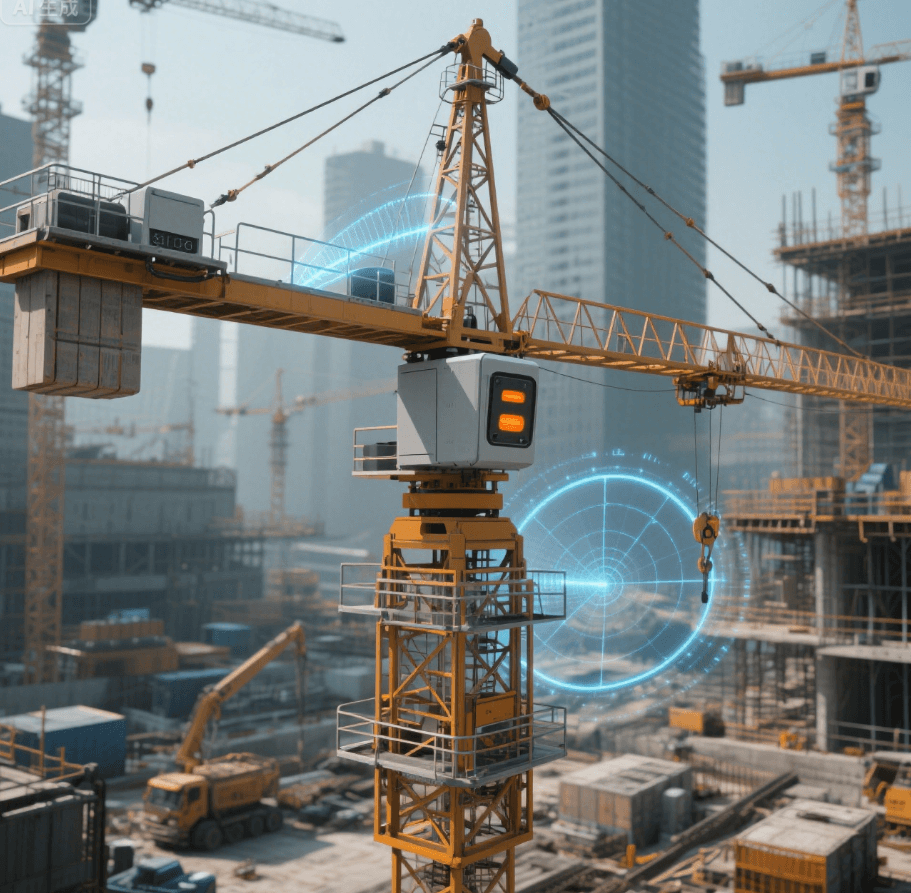
Millimeter-wave (mmWave) radar technology is emerging as a reliable and effective solution for tower crane anti-collision systems. By leveraging high-resolution sensing, long-range detection, and strong adaptability to harsh environments, mmWave radar provides real-time monitoring that significantly enhances construction safety.
Challenges in Tower Crane Safety
Tower cranes operate in constantly changing environments. Some of the main challenges include:
-
Limited visibility
Weather conditions such as fog, dust, and rain often reduce visibility, making it difficult for operators to judge distances and detect nearby obstacles. -
Dynamic site conditions
The position of cranes, equipment, and workers changes daily. Static safety systems cannot fully adapt to these changes. -
Human errors
Even with skilled operators, fatigue or miscommunication can lead to mistakes. Traditional radio-based coordination is not always reliable. -
High-value risks
A single collision between cranes or machinery can halt construction, cause million-dollar losses, and damage the reputation of contractors.
How Millimeter-Wave Radar Improves Crane Operations
Millimeter-wave radar offers several key advantages for tower crane collision prevention:
1. Precise Distance and Angle Measurement
Unlike ultrasonic or infrared sensors, mmWave radar measures both the range and angle of objects. This enables it to provide a detailed 3D map of surrounding obstacles, ensuring accurate detection of cranes, equipment, and workers.
2. All-Weather, All-Light Detection
Radar is not affected by rain, fog, or poor lighting. Whether during nighttime operations or in dusty conditions, radar sensors maintain stable performance.
3. Long Detection Range
With detection capabilities exceeding 300 meters (depending on the radar model), mmWave sensors provide operators with enough time to react and avoid collisions.
4. Real-Time Monitoring and Alerts
Integrated into the crane control system, radar can issue real-time warnings or automatically slow down operations when obstacles are detected, reducing reliance on human judgment.
5. Integration with IoT Systems
Radar data can be combined with IoT platforms for centralized monitoring, predictive maintenance, and safety reporting, supporting smarter site management.
Practical Applications on Construction Sites
-
Tower crane–to–tower crane anti-collision
When multiple cranes operate close to each other, mmWave radar continuously monitors boom and jib positions to prevent overlap. -
Crane–structure anti-collision
Radar sensors installed on cranes can detect nearby buildings, scaffolding, or temporary structures, avoiding accidental impacts. -
Crane–personnel safety monitoring
Workers entering danger zones can be detected early, triggering warnings to both operators and workers. -
Large machinery coordination
Excavators, trucks, and tower cranes often share the same working area. mmWave radar provides situational awareness for coordinated movements.
Case Example: Radar-Enhanced Construction Safety
A large-scale urban construction project deployed Linpowave mmWave radar on tower cranes to prevent collisions. The system monitored crane movements up to 250 meters in real time and issued alerts when cranes came within unsafe proximity of each other. During six months of operation, the project reported zero crane collision incidents despite high-density equipment usage and challenging weather conditions.
Learn more about Linpowave’s mmWave radar solutions for construction and industrial safety.
Benefits to Contractors and Developers
-
Reduced accident risk: Proactive detection minimizes collisions.
-
Cost savings: Avoids downtime, equipment repair, and insurance claims.
-
Improved compliance: Meets occupational safety regulations.
-
Operational efficiency: Supports smoother workflow with fewer interruptions.
FAQ
Q1: Why is mmWave radar better than cameras for crane safety?
A: Cameras rely on visibility and lighting, which are often compromised on construction sites. Radar works in all weather and lighting conditions, ensuring consistent detection.
Q2: Can mmWave radar detect workers in motion?
A: Yes. Radar can track both moving and stationary targets, including workers wearing safety gear, even in dusty or dark environments.
Q3: Is the installation process complex?
A: Not at all. Linpowave radar sensors are compact and can be easily mounted on cranes, integrated into existing control systems.
Q4: How does it help site managers?
A: Radar data can be centralized and visualized, giving managers a real-time overview of crane operations and potential safety risks.