






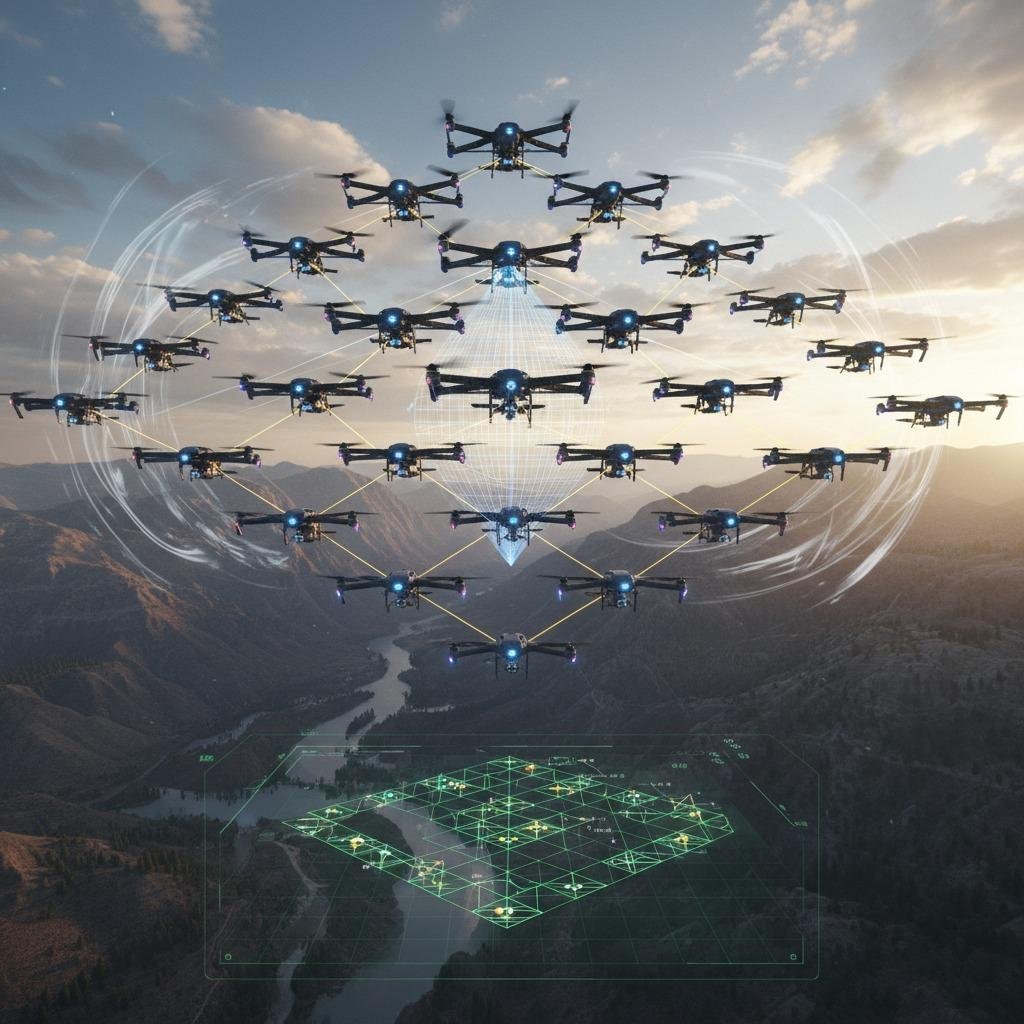
Unlocking the Power of Swarm Coordination in Drone Technology
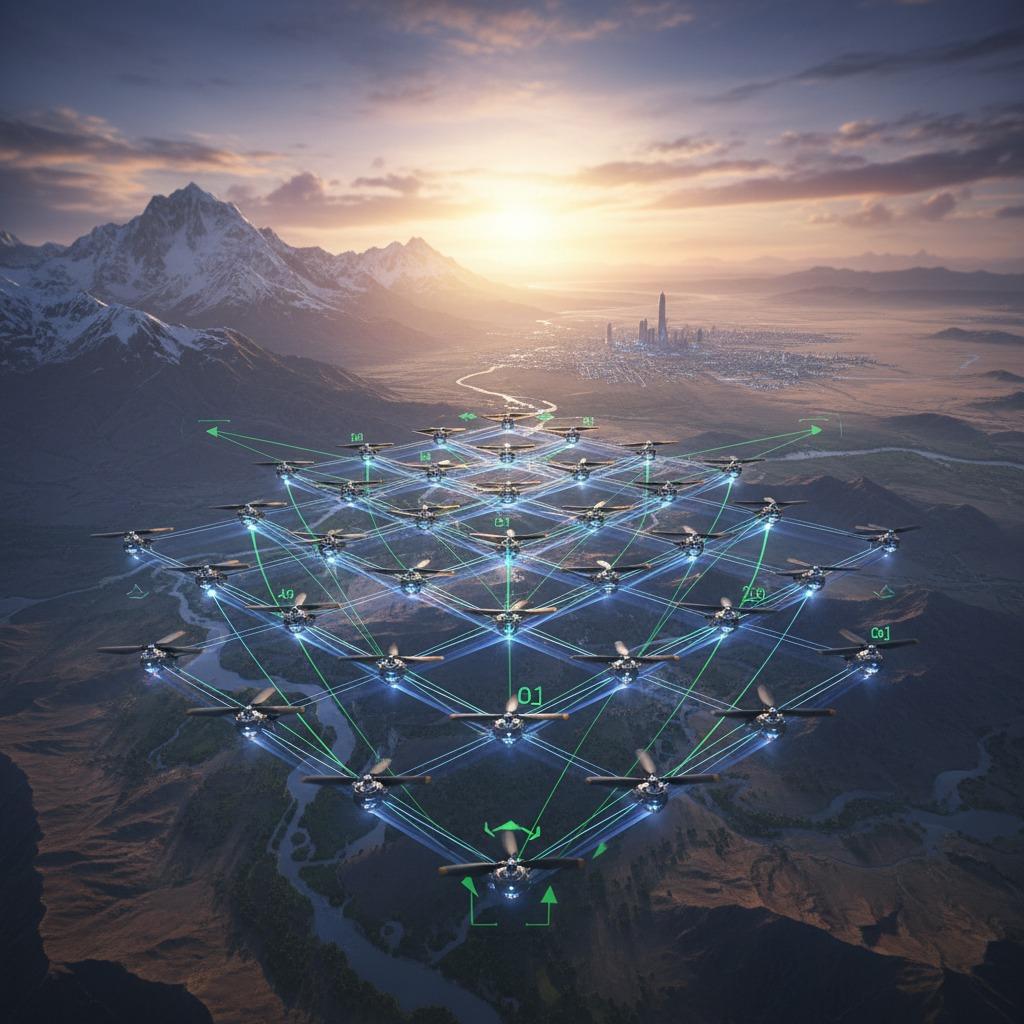
In the fast-evolving world of drone applications, one of the most pressing challenges is achieving seamless teamwork among multiple unmanned aerial vehicles (UAVs). Imagine a scenario where drones struggle to maintain positions during complex missions, leading to inefficiencies, safety risks, and mission failures. This is where swarm coordination becomes essential. Swarm coordination refers to the ability of multiple drones to operate as a unified system, sharing data and adapting in real-time to accomplish tasks that a single drone could never handle alone. Without effective swarm coordination, operations in search and rescue, environmental monitoring, or agricultural surveying can falter due to communication breakdowns or uncoordinated movements.
The Core Problem: Isolated Drones in a Connected World
Drones today often operate in isolation, which limits their potential in dynamic environments. The primary issue arises when individual drones lack the mechanisms to interact precisely with each other. For instance, without inter-drone ranging, drones cannot accurately measure distances between themselves, leading to collisions or ineffective coverage of large areas. Similarly, formation flying support is crucial for maintaining structured patterns, such as grid formations for surveillance, but without it, drones drift apart, disrupting the mission. These problems compound when collaborative perception—where drones share sensory data—is absent, causing blind spots in threat detection or data collection. Moreover, a distributed sensing network, which allows for decentralized data processing, is often underdeveloped, resulting in centralized bottlenecks that slow down decision-making and increase vulnerability to failures.
Solutions Through Advanced Swarm Coordination Technologies
To address these challenges, innovative solutions in swarm coordination are transforming drone fleets into intelligent, adaptive networks. Start with inter-drone ranging, which uses technologies like ultra-wideband (UWB) radios or laser-based systems to provide precise, real-time distance measurements. This enables drones to avoid obstacles and maintain safe proximities, directly solving collision risks. For formation flying support, algorithms based on artificial intelligence and control theory allow drones to dynamically adjust positions, ensuring stable formations even in windy conditions or uneven terrain. Collaborative perception enhances this by fusing data from multiple drones' cameras, LiDAR, and sensors, creating a comprehensive environmental map that no single drone could achieve. Implementing a robust distributed sensing network decentralizes computation, where each drone processes local data and shares insights via mesh networks, reducing latency and improving resilience against individual unit failures.
Real-World Applications and Benefits of Swarm Coordination
By integrating these elements, swarm coordination empowers diverse applications. In disaster response, coordinated swarms with inter-drone ranging and formation flying support can map affected areas swiftly, while collaborative perception identifies survivors in hard-to-reach spots. Agricultural drones benefit from distributed sensing networks to monitor crop health across vast fields, optimizing resource use and boosting yields. The benefits extend to security, where swarms provide persistent surveillance without human intervention. Overall, these solutions not only mitigate the isolation problem but also enhance efficiency, scalability, and safety. As drone technology advances, mastering swarm coordination will be key to unlocking next-level autonomous operations, ensuring that fleets work harmoniously to tackle complex real-world problems.
Future Outlook: Scaling Swarm Coordination for Tomorrow
Looking ahead, the evolution of swarm coordination promises even greater integration with emerging tech like 5G and edge computing. Challenges like regulatory hurdles and energy constraints remain, but ongoing research in AI-driven optimization is paving the way. By prioritizing inter-drone ranging, formation flying support, collaborative perception, and distributed sensing networks, industries can future-proof their drone operations. Embracing these solutions today means staying ahead in an increasingly automated world, where coordinated swarms redefine what's possible.